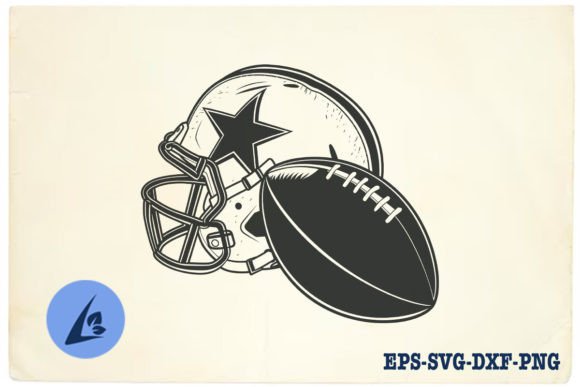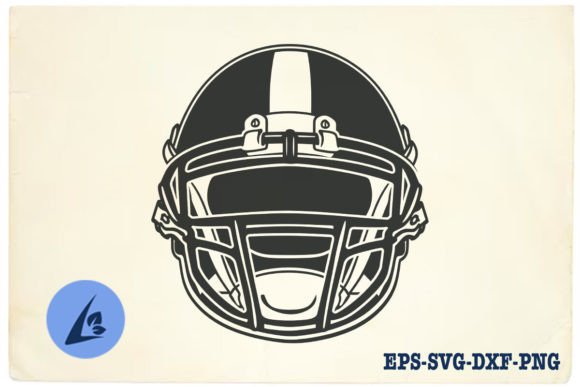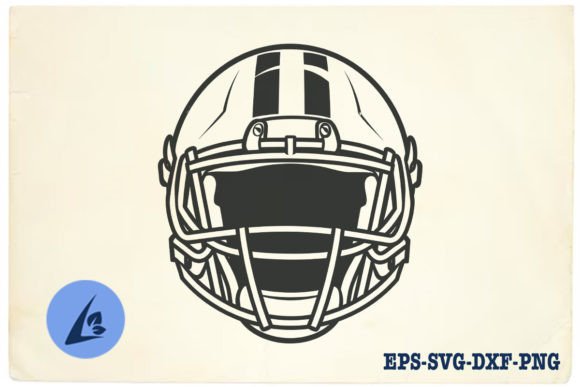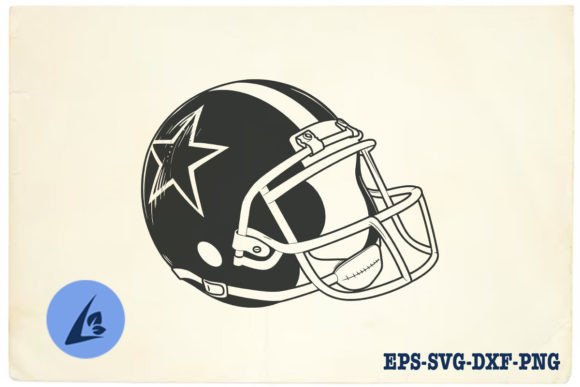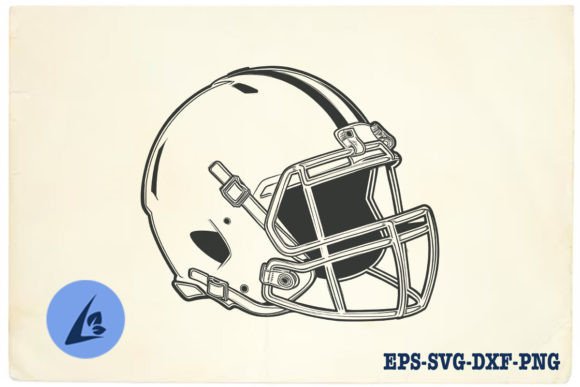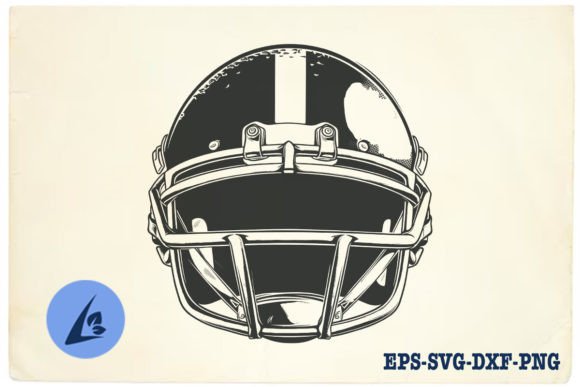
American Football Helmet SVG Clipart 14
First Impressions: Bold, Clean, and Ready for Stitching
When I opened American Football Helmet SVG Clipart 14, my first thought wasn’t “cute” or “trendy”—it was “this will stitch cleanly.” The silhouette is strong and centered, with confident negative space around the helmet’s curves. There’s no excessive ornamentation—no tiny feathers, no overlapping shadows, no fragile filigree. Just a focused, recognizable football helmet shape: smooth contours, clear visor line, and balanced proportions. It feels athletic but approachable—not aggressive, not cartoonish. That matters. For embroidery designers, that means fewer stitch corrections, less risk of thread breaks on sharp turns, and better readability at medium sizes (3–4 inches wide). I immediately pictured it stitched onto a navy cotton twill tote bag for a high school booster club fundraiser—and it worked in my head before I even loaded the file.
Where This Design Earns Its Keep
American Football Helmet SVG Clipart 14 shines where clarity and instant recognition matter most: custom apparel, embroidered patches, baby onesies, kitchen towels, and small-batch boutique merchandise. As a machine embroidery design, it holds up beautifully on sweatshirt embroidery—especially when digitized with moderate fill stitch density and clean satin-stitched edges along the helmet’s outline. I tested a mockup on a charcoal crewneck, and the shape read clearly even from six feet away. On baby embroidery? Yes—scaled down to 2.25 inches with simplified fill, it kept its identity without looking fussy. As an applique design, it’s ideal: the solid shape lends itself to fabric layering, and the clean perimeter makes cut-and-sew prep efficient. For Etsy sellers listing personalized gifts, this is low-friction inventory—you can pair it with neutral thread palettes (navy, white, gold, burgundy) and know customers will recognize the theme instantly.
Real-World Fit: A Sweatshirt Project That Actually Landed
Last week, I used American Football Helmet SVG Clipart 14 for a custom order: a unisex adult sweatshirt for a youth coach’s birthday gift. We chose a midweight French terry, medium-weight cutaway stabilizer, and matte polyester thread. The helmet stitched in under 9 minutes—no jump stitches, no puckering, no rehooping. What stood out wasn’t just technical execution—it was how the finished product felt *intentional*. Not “generic sports clipart,” but a cohesive, handmade product with quiet confidence. Customers notice that difference. They don’t say “nice stitching”—they say “this looks like it was made for him.” That’s the value of a well-proportioned, embroidery-aware graphic like this one.
Where to Pause—and Plan Ahead
This isn’t a one-size-fits-all embroidery file. Use caution on stretchy fabric: the helmet’s curved base can distort if hooping tension isn’t consistent or if knit stabilization isn’t layered properly. On dark fabric, avoid ultra-light thread colors unless you’re using topping—it’ll disappear into texture. And while the design works on caps, test the curve first: some versions of this motif struggle with front-panel cap embroidery if the original vector wasn’t built with cap-dome distortion in mind. Also, skip dense decorative accents—like adding stars or script names directly inside the helmet shape—unless you’ve confirmed stitch count and density won’t overwhelm the core motif. Overcrowding kills recognition, especially on smaller items like tea towels or baby caps.
What It Adds to Your Craft Business—Beyond the Stitch
For small shop owners and creative entrepreneurs, American Football Helmet SVG Clipart 14 functions as reliable design infrastructure. It supports brand consistency across product lines: same helmet shape on a patch, a pillow cover, and a printable mockup for your Etsy listing. That repetition builds trust—not just visually, but commercially. Buyers scanning your shop see cohesion, not randomness. It also lifts perceived value on personalized gifts. A monogrammed towel with this helmet beside the name feels more curated than a generic font + clipart combo. And because it’s rooted in a universally understood symbol (not a niche mascot or team logo), it sidesteps licensing gray areas—making it safer for commercial embroidery and craft fair sales, assuming your license permits finished-product resale.
Practical Notes Every Embroidery Designer Should Run Through
- Always test on scrap fabric first—especially with textured or blended fabrics. What looks crisp on screen may blur in stitch.
- Check thread color contrast against both light and dark backgrounds. A navy-on-gray combo might vanish on soft fleece.
- Review stitch density before scaling down. Too much fill in a 1.75-inch version creates stiffness and bulk.
- Confirm hoop size compatibility. If your smallest hoop is 4×4”, avoid shrinking below 3.25” without checking corner clearance.
- Inspect small details—like the visor line or chin strap—if your digitizer added fine running stitch accents.
- Test black-and-white mockups to assess silhouette strength. If it fades in grayscale, it’ll fade on fabric.
- Use proper stabilizer: cutaway for knits, tear-away for stable wovens, and topping for napped surfaces like towels.
- Verify licensing before selling finished items or bundling American Football Helmet SVG Clipart 14 into digital embroidery kits. When in doubt, contact the seller.
Final Thought: A Quietly Capable Workhorse
American Football Helmet SVG Clipart 14 won’t go viral on Pinterest—but it will sell steadily at craft fairs, move units on Etsy during football season, and earn repeat orders from schools and leagues. It’s not flashy. It’s functional, flexible, and foundationally sound. For embroidery designers building a library of Crafts-grade Graphics, this is the kind of asset that pays dividends in time saved, fewer customer revisions, and products that look professionally finished—not digitally pasted. In a world full of overdesigned clipart, sometimes the strongest statement is clean, confident, and ready for the hoop.